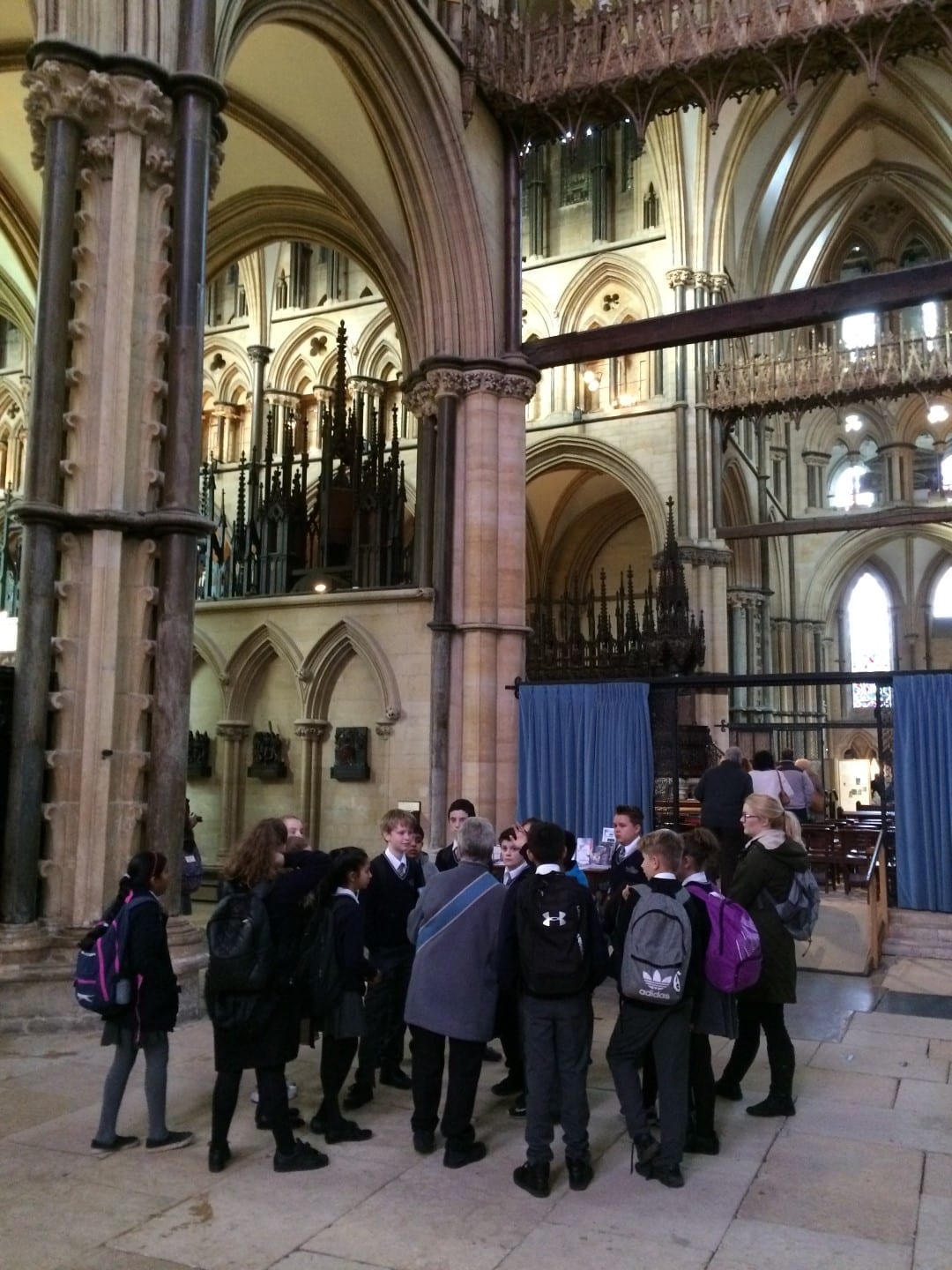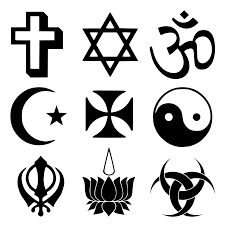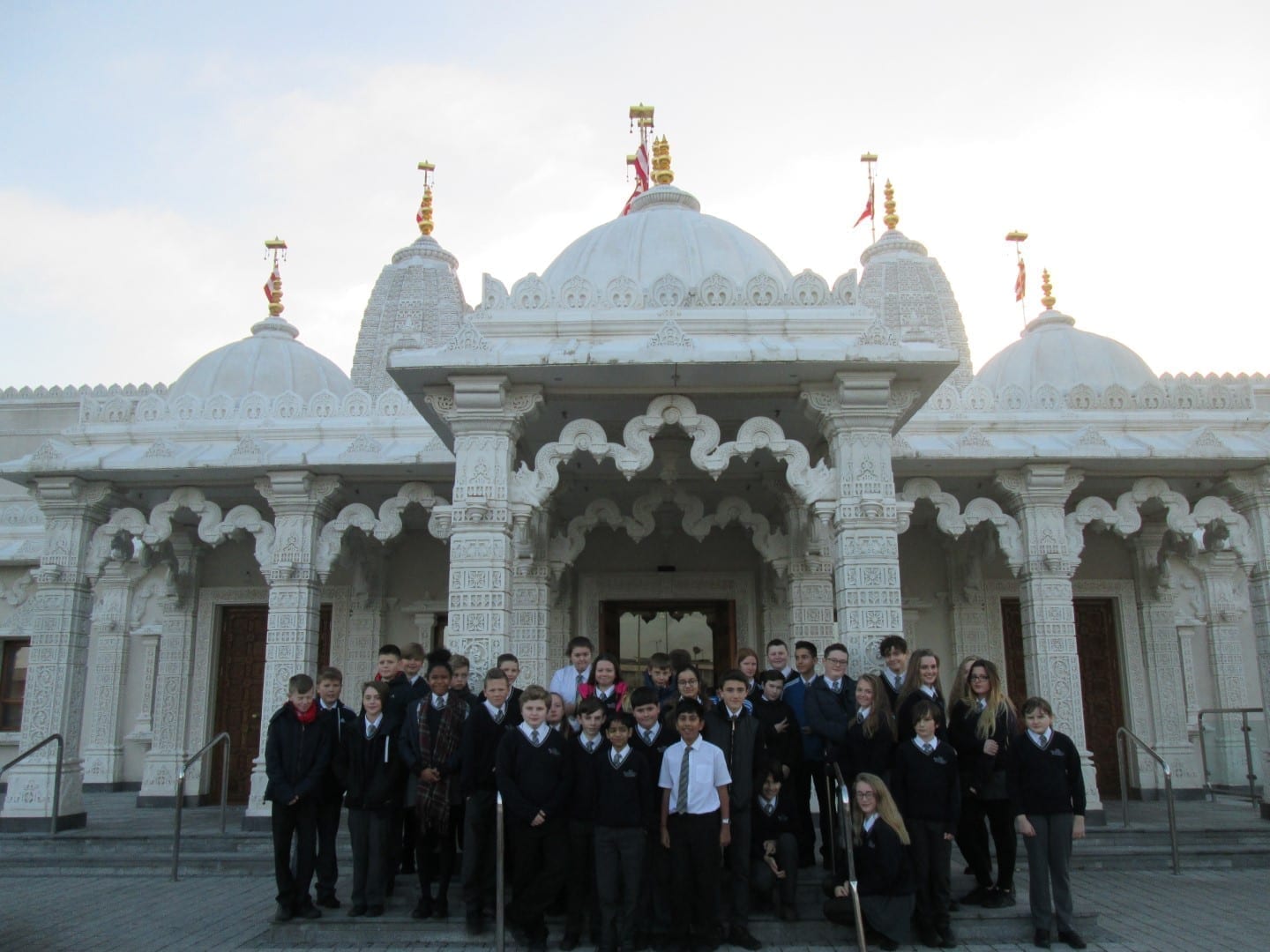
Our RE Curriculum has been designed to explore religious and non -religious traditions that have shaped Great Britain and enable pupils to take their place within a diverse multi-religious, cultural, and multi-secular society. We wish to give young people the opportunity to see, discuss and explore religion and non-religion in the world and allow students the opportunity to make sense of their own place in this world. Our curriculum is built around big questions, academic rigour, and opportunities to see the world through different lenses.
- Using the theology lens pupils are enabled to get to the heart of what people believe through an exploration and analysis of religious text, story and imagery to discern and define the basis of belief.
- Using the social science lens pupils are enabled to see how the beliefs of religious worldviews are played out in the life of a believer, acknowledging that this will be different between and within religious and non-religious worldviews.
- Using the philosophy lens pupils are enabled to extrapolate how religious and non-religious believers would act in given situations which are part of living in a diverse society.
Our intention is that students can hold balanced, well-informed conversations as well as asking deep and searching questions. This curriculum supports the personal development curriculum positively. The RE curriculum enables pupils to take their place in a complex society by deepening their knowledge and understanding of religious beliefs and how these are lived in our multi-faith society, covering the religious and non-religious worldviews.
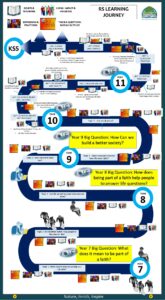
| Year 7 Overarching Question:
What does it mean to be part of a faith?
|
In year 7 we will introduce carefully selected faiths which will be explored from different angles from year 7 to 11 and hopefully beyond. Students will learn key concepts and underpinning ideas and explore how faith can influence everyday life. Students will explore the idea that not all people that practice a faith have the same views and have opportunities to express their own views. |
| Topic 1: What is it like to worship as a Christian? | In this topic we will explore how Christian’s worship and whether all Christians worship in the same way. We will ask questions such as if you do not worship are you still a Christian? We will explore why people gain and lose faith in their personal journeys. |
| Topic 2: Does Buddhism help people to overcome suffering and live a better life?
|
In this topic we will look at an eastern religion and investigate the beliefs and texts, exploring both meaning and practices. We then explore how Buddhists may try to lead a better life, asking questions around this. We then think about what it would be like to be a practising Buddhist going to school in Britain. |
| Year 8 Overarching Question:
How does being part of a faith help us to answer life questions?
|
In this year’s curriculum students will be able to apply their knowledge of the core religions they have studied to explore to more moral, ethical, and existential questions. This will give a forum for students to be able to answer and explore bigger questions and link it to more contemporary issues. This unit will link back to their year 7 learning but also link forward to their year 9 learning. |
| Topic 1: How did we get here and where are we going? | In this topic students will explore key beliefs about God including alternative viewpoints. Students will debate and explore how the world began and look at scientific viewpoints. Students will also look at ideas of the afterlife and be able to offer their own viewpoints. |
| Topic 2: Does the world need war?
|
In this unit students will see what different religions say about conflict in the world exploring how conflict is presented in holy texts. Students will explore whether war is ever just using examples. Alternatives to war such as Pacifism will be investigated, and students will be able to evaluate their learning to offer their own viewpoint of the justification of conflict in the world. |
| Year 9 Overarching Question:
How can we build a better society?
|
Students will explore social change through carefully guided exploration of moral issues, building on the morals and ethical ideas they explored in year 8. Again, they will look at the role of faiths and beliefs / practices but also be challenged to think about personal viewpoints and reflect upon the society that they live in. Through revisiting key faiths, it will allow students to explore and evaluate some very key issues that cause conflict in society and allow students to be able to explain viewpoints in an informed and reflective manner. |
| Topic 1: Does everyone in society have the same rights?
|
In this unit we will start to consider how we know we are making the right choices in life. We will then debate topical issues such as should animals have rights. How should people be punished if wrong is done? Is it ever right to end a life? Underpinning this unit will be contemporary case studies and varied viewpoints to challenge and generate questioning and critical thinking. |
| Topic 2: Can we all get on?
|
In this topic we are going to spotlight and explore tolerance. We will look at issues such as how people of different faiths get on, equality between men and women and crucially, exploring why there are such extremes of views in society. This topic will generate a range of insights into the society that we live in and offer lots of opportunities to debate and question. |